



Latch: A Complete Guide to Types, Uses, and Installation Tips
Introduction
From keeping doors securely shut to fastening machinery panels, the latch is one of the most widely used yet often overlooked mechanical devices in everyday life. Found in homes, vehicles, and industrial equipment, latches play a critical role in safety, security, and functionality.
Whether you are upgrading a garden gate, repairing a cabinet, or installing safety measures on machinery, understanding how a latch works, the different types available, and the correct way to fit one will save you time, money, and frustration. This guide will walk you through everything you need to know about latches — from their basic function to installation and maintenance.
What is a Latch and How Does it Work
A latch is a fastening mechanism designed to hold two objects or surfaces together temporarily, often allowing them to be opened or closed easily when needed. In its simplest form, a latch prevents movement by physically engaging a catch or strike plate.
Unlike a lock, which usually requires a key or code, a latch may be operated manually, mechanically, or electronically, depending on its design. The fundamental principle remains the same — a moving part engages with a fixed part to secure an opening, whether that’s a door, gate, or cabinet.
Types of Latches
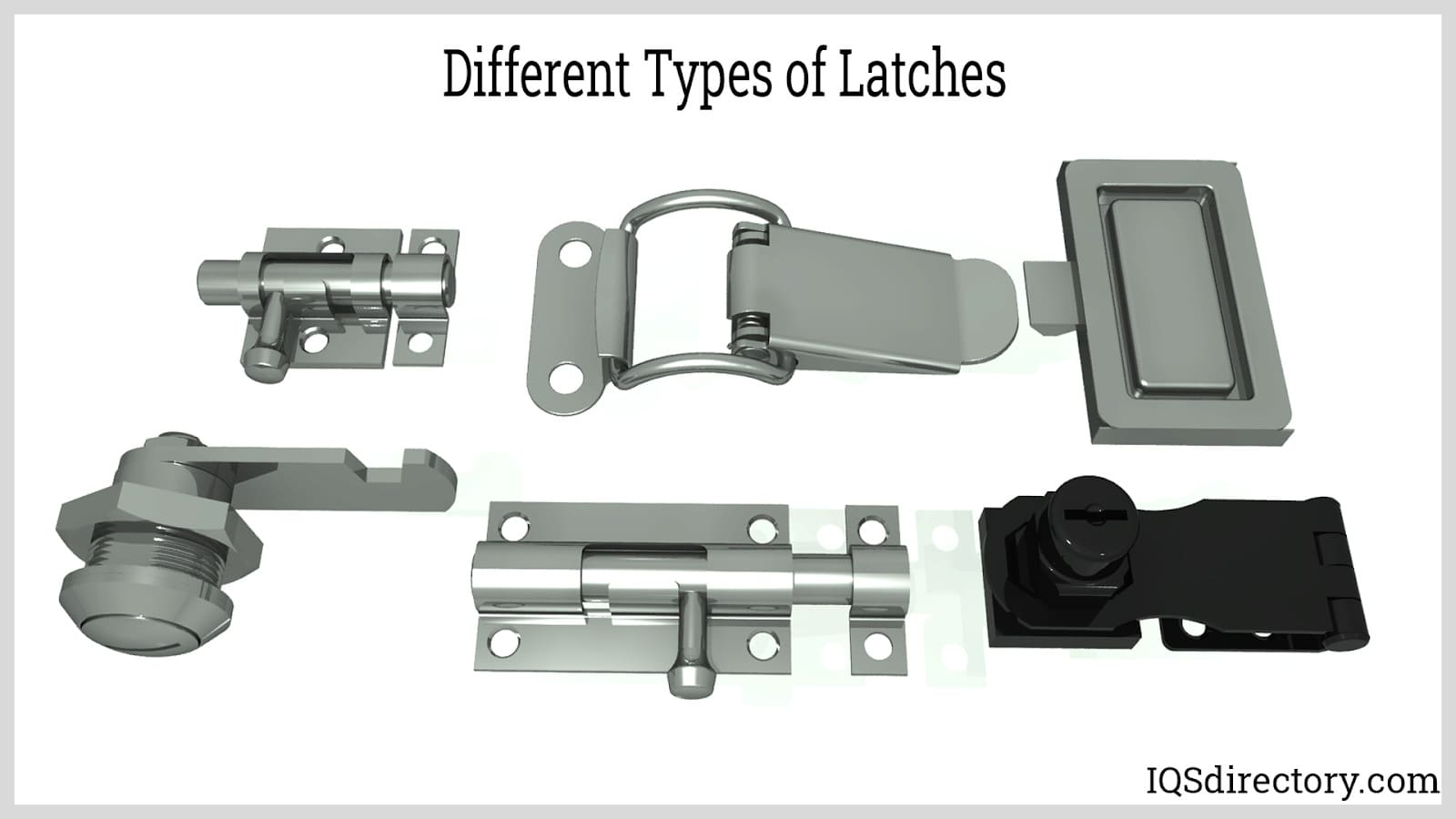
Latches come in many designs, each suited to specific tasks. Here are some of the most common:
Mechanical Latches – These rely purely on physical engagement, such as bolt latches and cam latches. They are durable, simple, and widely used in domestic and industrial applications.
Magnetic Latches – Operated using magnetic force, these are often used in furniture doors and lightweight enclosures. They offer a sleek, minimalistic appearance without visible moving parts.
Electronic Latches – Controlled by electric signals, these are found in advanced security systems, cars, and smart homes. They can be triggered by keypads, card readers, or remote controls.
Popular Examples include:
- Bolt latch – slides a metal bolt into a catch.
- Cam latch – uses a rotating cam to secure panels or cabinets.
- Spring latch – uses spring tension for easy opening and closing.
- Toggle latch – clamps surfaces tightly, common in toolboxes.
- Slam latch – engages automatically when the door is pushed shut.
Each type has its own strengths and weaknesses, which is why choosing the right one for your project is essential.
Common Applications of Latches
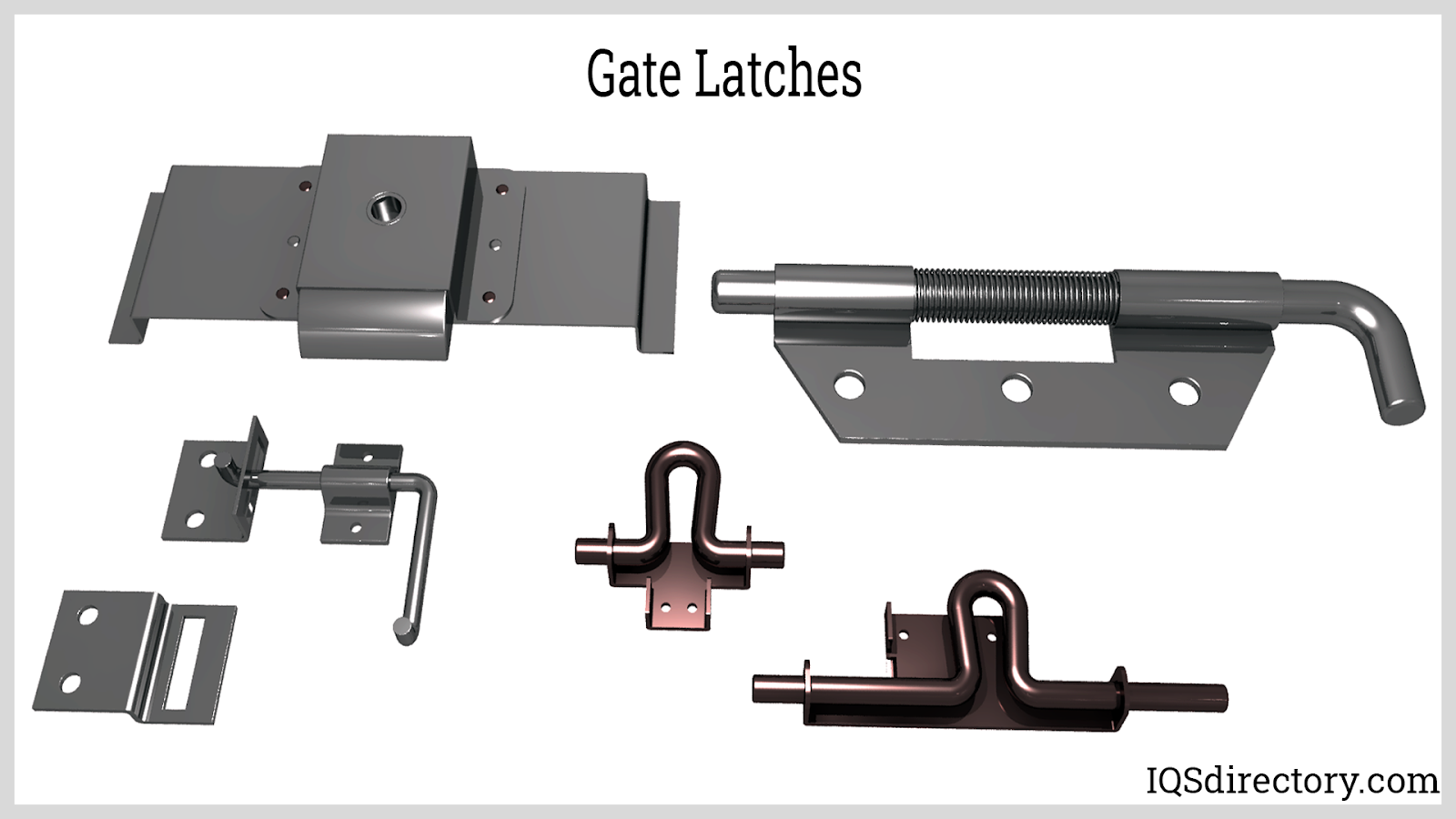
Latches are everywhere once you start looking for them.
In residential settings, latches secure doors, gates, cabinets, windows, and storage boxes. Garden gates often use bolt or gravity latches, while kitchen cabinets might feature magnetic or roller catches for smooth operation.
In the automotive industry, latches are vital for safety and convenience. They hold car doors, bonnets, boot lids, and seat mechanisms firmly in place until released. High-strength latches are particularly important in securing cargo compartments in vans and lorries.
In industrial environments, latches secure machine guards, electrical panels, and storage compartments. They’re often designed to withstand vibration, extreme temperatures, and heavy use, ensuring safety compliance and reliability.
Choosing the Right Latch for Your Needs
When selecting a latch, consider the following factors:
- Material – Stainless steel is excellent for outdoor use due to its rust resistance, while brass offers a more decorative touch indoors.
- Strength – Heavy-duty latches are better for security applications, whereas light-duty versions work well for furniture.
- Durability – Consider wear and tear, especially in high-traffic areas.
- Environment – Outdoor latches should withstand moisture, temperature fluctuations, and UV exposure.
- Aesthetics – Choose a style and finish that complements your décor.
- Budget – Prices vary significantly, so balance quality with cost.
A well-chosen latch ensures functionality, safety, and style for years to come.
How to Install a Latch
Fitting a latch is usually straightforward, but accuracy is essential for smooth operation.
Tools you may need: screwdriver, drill, measuring tape, pencil, and safety goggles.
Step-by-Step Installation:
- Mark the position – Align the latch with the strike plate or catch.
- Drill pilot holes – Prevents splitting and ensures correct alignment.
- Attach the latch – Secure it with screws, ensuring it moves freely.
- Install the catch/strike plate – Align it perfectly with the latch mechanism.
- Test the operation – Make adjustments if the latch is too tight or loose.
Avoid overtightening screws, as this can warp the latch and cause jamming.
Maintenance and Troubleshooting
A well-maintained latch can last for many years.
Maintenance tips:
- Clean regularly with a damp cloth to remove dust and grime.
- Lubricate moving parts with light machine oil to prevent stiffness.
- Check screws and fixings periodically to ensure they remain secure.
Common issues:
- Misalignment – Often caused by sagging doors or frames; fix by realigning the catch.
- Stiff movement – Clean and lubricate; replace if corrosion is severe.
- Failure to engage – Check for worn or damaged parts and replace if necessary.
If the latch shows significant wear, replacement is often a better long-term solution than repeated repairs.
Conclusion
The latch may seem like a small and simple component, but it plays a huge role in our everyday safety and convenience. From securing garden gates to ensuring industrial machinery operates safely, the right latch can make all the difference.
By understanding the types, uses, and installation methods, you can make informed choices that enhance both function and security. Whether you’re a DIY enthusiast or an industry professional, a well-selected and well-maintained latch is always worth the investment.
FAQs
What’s the difference between a latch and a lock?
A latch secures two surfaces together but can usually be opened without a key, while a lock requires a key, code, or other unlocking method.
Can latches be used outdoors?
Yes, but choose weather-resistant materials like stainless steel or galvanised metal to prevent rust.
How do I know what size latch I need?
Measure the thickness of the door or gate and ensure the latch mechanism fits comfortably without protruding excessively.
Are electronic latches better than mechanical ones?
Electronic latches offer convenience and integration with smart systems, but mechanical latches are often more reliable in harsh conditions.
How often should I replace a latch?
There’s no fixed timeline — replace it if it becomes worn, damaged, or no longer operates smoothly.
You may also read: Brass Door Knobs: Timeless Style and Durability for Your Home